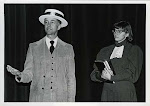
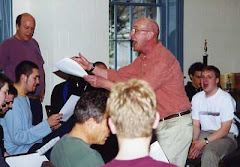
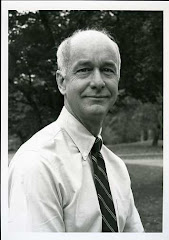
We threw Suerk a big party.
Here is a link to some of what we did.
http://www.juliamacinnisphotography.com/Suerk/
28 August 2010


29 May 2010
Your Letters
I started this blog for Suerk because there were too many of you to be in personal contact with. In the end, the blog served a far greater purpose. It provided a great many of you the conduit through which to send Suerk your love. There are hundreds of emails in the 'forpaulsuerken' inbox. I read them to him during my daily call -- every day at 11am. It was a rhythm I imposed on him initially, but one he grew to depend on -- that daily call. Whenever there was a new email I read it to him. One regret I have is that we never worked out a way for him to respond to the emails. He never seemed to have the energy to actively participate in the exchange. But he loved getting any and all news from his friends. He lived for it.
John Koontz (Mercersburg '95) wrote two of the letters in the inbox. They are wonderfully representative of most of the rest. They are personal, emotional, proud, appreciative, honest. Suerk was fortunate to have had those many months to get letters like these, and he knew it. He loved it. With John's permission, here are two of his.
Suerk,
I’ve tried to reconnect with you recently, but was convinced that my continued refusal to embrace Facebook and the like had prevented me from getting through. I got an email from my big sister, Michelle that has explained your recent episode and my inability to find you.
You’re surely getting lots of letters and visitors, and part of me wants to jump on my motorcycle (wanted one ever since seeing you ride yours among your legion of cross country runners) and ride through western Pa to see you. But instead I’ll keep this short and sweet.
As has been par for the course in our relation, I’ll talk about me… I figure it will tickle you to know that I terminated my subscription to the Rush Limbaugh newsletter before I even graduated from Mercersburg. But I hope it will make you proud to learn that last year, I quit my lucrative project management job to join a start up venture hoping to deploy solar power all across North America. I decided to tell you this at this time of all times, because it is quite easy to see how much I have changed since I first met you in 1992 or so. I guess anything can happen. I have always attributed much of my success to you and have fond memories of both the fun and hard lessons you bestowed on me. In particular, I was always amazed at how people respected and admired you.
Before your news reached me, I was rereading some of your advisor notes to my parents, and on March 4th, 1995 you wrote “Someday we might look at this time in John’s life as the point where he decided to be the person we all knew he could be.” As usual I am a bit behind schedule, but I will say this: I, and many others who have crossed paths with you Suerk, could not achieve and wouldn’t know how to decide to achieve, but for knowing you. You are that important!
I miss you. Get well… and be good to your amanuensis.
From just another of your screechy first tenors,
John B. Koontz, Jr. ‘95
Suerk,
I’ll make this short….ish. I think of you often. Your impact on who I am has been profound. To prove this point, I’d like to tell you about what I am most proud of after my wife and two little girls. In 2008, the kid across the hall from you in Keil Hall that made a point of rubbing his Rush Limbaugh newsletter in everyone’s face, the kid who sang first tenor, despite having the voice of Kermit the frog (hey, it ain’t easy being green), the kid who learned that he was truly an “emotional rollercoaster” when he found out that he would not be a prefect (or perfect for that matter), the kid who still writes run on sentences and thinks they should rank with alliteration and hyperbole as writing tools, achieved a dream. I dreamt that I could be part of a solution instead of a complainer and a whiner in this world. Much of what you taught me, in actions and in words, in carrots and in sticks, has sunk into this thick skull and taken root. I don’t intend to brag or boast but to show you how far I’ve come. Somewhere in south Jersey there is a flooring manufacturer that is generating a significant percentage of their energy from the sun. (That’s it. That’s what I’m so damn proud of. [In my world, sentences should end in prepositions too.]) When I first met these people, these flooring manufacturers, Mannington Mills, in 2007, I felt like I was trying out for the Octet. I couldn’t believe they even agreed to see me. As I walked in their conference room and realized that I was talking with some heavy hitters (CFO, VP Environment and Safety, Director of Maintenance), it occurred to me that they were there because I had been taken seriously. A switch flipped in me and I delivered the best (and most successful to date) presentation ever. I felt like I was in a retirement home in Chambersburg. I relaxed and new that what I had to offer was good enough! A year and a half later they had a 602.7 kW photovoltaic system on their roof (In its first day and a half of operation it generated the equivalent of what my family uses in a year). Suerk, you probably won’t ever know how much of an influence you have had on this world. I worry/struggle with what my own impact/legacy will be constantly. You continue to teach me, because I imagine that you don’t even care to know. It isn’t about knowing what impact you’ve had; it’s about making sure you put it all out there and didn’t hold back. I intend to follow your example and I thank you sincerely for setting it.
I love you Suerk! Happy New Year!
John B. Koontz, Jr
John Koontz (Mercersburg '95) wrote two of the letters in the inbox. They are wonderfully representative of most of the rest. They are personal, emotional, proud, appreciative, honest. Suerk was fortunate to have had those many months to get letters like these, and he knew it. He loved it. With John's permission, here are two of his.
Suerk,
I’ve tried to reconnect with you recently, but was convinced that my continued refusal to embrace Facebook and the like had prevented me from getting through. I got an email from my big sister, Michelle that has explained your recent episode and my inability to find you.
You’re surely getting lots of letters and visitors, and part of me wants to jump on my motorcycle (wanted one ever since seeing you ride yours among your legion of cross country runners) and ride through western Pa to see you. But instead I’ll keep this short and sweet.
As has been par for the course in our relation, I’ll talk about me… I figure it will tickle you to know that I terminated my subscription to the Rush Limbaugh newsletter before I even graduated from Mercersburg. But I hope it will make you proud to learn that last year, I quit my lucrative project management job to join a start up venture hoping to deploy solar power all across North America. I decided to tell you this at this time of all times, because it is quite easy to see how much I have changed since I first met you in 1992 or so. I guess anything can happen. I have always attributed much of my success to you and have fond memories of both the fun and hard lessons you bestowed on me. In particular, I was always amazed at how people respected and admired you.
Before your news reached me, I was rereading some of your advisor notes to my parents, and on March 4th, 1995 you wrote “Someday we might look at this time in John’s life as the point where he decided to be the person we all knew he could be.” As usual I am a bit behind schedule, but I will say this: I, and many others who have crossed paths with you Suerk, could not achieve and wouldn’t know how to decide to achieve, but for knowing you. You are that important!
I miss you. Get well… and be good to your amanuensis.
From just another of your screechy first tenors,
John B. Koontz, Jr. ‘95
Suerk,
I’ll make this short….ish. I think of you often. Your impact on who I am has been profound. To prove this point, I’d like to tell you about what I am most proud of after my wife and two little girls. In 2008, the kid across the hall from you in Keil Hall that made a point of rubbing his Rush Limbaugh newsletter in everyone’s face, the kid who sang first tenor, despite having the voice of Kermit the frog (hey, it ain’t easy being green), the kid who learned that he was truly an “emotional rollercoaster” when he found out that he would not be a prefect (or perfect for that matter), the kid who still writes run on sentences and thinks they should rank with alliteration and hyperbole as writing tools, achieved a dream. I dreamt that I could be part of a solution instead of a complainer and a whiner in this world. Much of what you taught me, in actions and in words, in carrots and in sticks, has sunk into this thick skull and taken root. I don’t intend to brag or boast but to show you how far I’ve come. Somewhere in south Jersey there is a flooring manufacturer that is generating a significant percentage of their energy from the sun. (That’s it. That’s what I’m so damn proud of. [In my world, sentences should end in prepositions too.]) When I first met these people, these flooring manufacturers, Mannington Mills, in 2007, I felt like I was trying out for the Octet. I couldn’t believe they even agreed to see me. As I walked in their conference room and realized that I was talking with some heavy hitters (CFO, VP Environment and Safety, Director of Maintenance), it occurred to me that they were there because I had been taken seriously. A switch flipped in me and I delivered the best (and most successful to date) presentation ever. I felt like I was in a retirement home in Chambersburg. I relaxed and new that what I had to offer was good enough! A year and a half later they had a 602.7 kW photovoltaic system on their roof (In its first day and a half of operation it generated the equivalent of what my family uses in a year). Suerk, you probably won’t ever know how much of an influence you have had on this world. I worry/struggle with what my own impact/legacy will be constantly. You continue to teach me, because I imagine that you don’t even care to know. It isn’t about knowing what impact you’ve had; it’s about making sure you put it all out there and didn’t hold back. I intend to follow your example and I thank you sincerely for setting it.
I love you Suerk! Happy New Year!
John B. Koontz, Jr
27 May 2010
Accommodations
Mercersburg.edu has an accommodations listing for travelers. Here's a link that will lead you closer to it. Click HERE and scroll down to the "Accommodations" click, and there's also a "Getting Here" aide for those who might need it.
15 May 2010
Suerk's Obituary
Suerk dictated his own obituary within weeks of the accident in July 2008. Here it is, almost exactly as he had intended it.
Paul Maxwell Suerken
Born in Erie, PA on March 31st, 1938
Died on March 21st, 2010
Paul Maxwell Suerken , 71, of Hilltop Road, Erie, died following a prolonged illness after suffering a spinal injury in 2008. A native of Erie, Paul was the son of the late Maxwell Crouch and Alice Sherman Suerken.
Paul was a graduate of McDowell High School in 1956, and a graduate of Dartmouth College in 1960. He then earned a Masters Degree from Dartmouth in 1981. For thirty one years, Paul taught at the Mercersburg Academy, a residential school for boys and girls, 9th -12th grade, in Mercersburg, PA. In boarding schools a teacher wears many different hats. Paul taught English, Music, and led several musical groups, both vocal and instrumental. He also was a cross-country coach. He was in charge of two different dormitories, chaired the English Department and was a college counselor. A life long bachelor, Paul considered his students to be his family. Paul was an avid runner and ran thirteen marathons, including two Boston marathons. During the school year of 1981-1982, Paul taught in England at Cranleigh School in the county of Surrey. Paul loved his job and there is evidence to show that his students loved him back. Paul loved to travel.
He is survived by many cousins and his “family” of former students whose lives he deeply touched and enriched through his tireless good counsel.
Memorials may be made to The Paul Suerken Scholarship fund at Mercersburgs Academy, 300 East Seminary St. Mercersburg, PA 17236
Paul Maxwell Suerken
Born in Erie, PA on March 31st, 1938
Died on March 21st, 2010
Paul Maxwell Suerken , 71, of Hilltop Road, Erie, died following a prolonged illness after suffering a spinal injury in 2008. A native of Erie, Paul was the son of the late Maxwell Crouch and Alice Sherman Suerken.
Paul was a graduate of McDowell High School in 1956, and a graduate of Dartmouth College in 1960. He then earned a Masters Degree from Dartmouth in 1981. For thirty one years, Paul taught at the Mercersburg Academy, a residential school for boys and girls, 9th -12th grade, in Mercersburg, PA. In boarding schools a teacher wears many different hats. Paul taught English, Music, and led several musical groups, both vocal and instrumental. He also was a cross-country coach. He was in charge of two different dormitories, chaired the English Department and was a college counselor. A life long bachelor, Paul considered his students to be his family. Paul was an avid runner and ran thirteen marathons, including two Boston marathons. During the school year of 1981-1982, Paul taught in England at Cranleigh School in the county of Surrey. Paul loved his job and there is evidence to show that his students loved him back. Paul loved to travel.
He is survived by many cousins and his “family” of former students whose lives he deeply touched and enriched through his tireless good counsel.
Memorials may be made to The Paul Suerken Scholarship fund at Mercersburgs Academy, 300 East Seminary St. Mercersburg, PA 17236
14 May 2010
From John Koontz (Mercersburg '95)
I cried for Suerk again today. I heard about the reunion in August and I'm stoked. I've read all the posts and I feel badly that I didn't learn how to write nearly as well as so many other Suerk disciples. But what Suerk did for me is help me deal with emotions. I have always been a tough nut to crack but Suerk, I think, prided himself on his ability to handle all comers.
I entered his world knowing I couldn't sing. I left the Academy a first tenor, one of Suerk's projects. I smile while I cry today. Suerk continues to help me deal with my crazy emotions. I miss you Suerk, and will probably get emotional every time I see the Cleveland Indians logo, or a Boston terrier, hear "Four Strong Winds," or think about my responsibilities as a mentor to my children. Suerk taught me about mentors too.
I entered his world knowing I couldn't sing. I left the Academy a first tenor, one of Suerk's projects. I smile while I cry today. Suerk continues to help me deal with my crazy emotions. I miss you Suerk, and will probably get emotional every time I see the Cleveland Indians logo, or a Boston terrier, hear "Four Strong Winds," or think about my responsibilities as a mentor to my children. Suerk taught me about mentors too.
27 April 2010
A Note From Mr. Plantz
Mercersburg very much needed a Paul Suerken. Founded with the staid old English Finishing Schools as a model, Mercersburg Academy was an anachronism that neither met the spirit of our new democracy nor the needs of a rural Pennsylvania student body in which landed gentry and lords were missing.
Neither the endearing spontaneous guffaw nor the after-class: “Hey Suerk, how about a run?” fit the intended mold. The spoken student had not obviously stood at attention when Suerk entered his classroom until the authoritative signal was given to be at ease. Yes, Modern Mercersburg owes him much.
Leonard Plantz
Faculty 1943-1984
Neither the endearing spontaneous guffaw nor the after-class: “Hey Suerk, how about a run?” fit the intended mold. The spoken student had not obviously stood at attention when Suerk entered his classroom until the authoritative signal was given to be at ease. Yes, Modern Mercersburg owes him much.
Leonard Plantz
Faculty 1943-1984
11 April 2010
A Word From George Alter
Paul is the only person I always referred to as my mentor. I have had a love of many types of music all my life. When I arrived at Mercersburg in the fall of 1967 I was very “wet behind the ears” and immature. Thru the next 4 years interacting with Paul thru Glee Club, Octet, and living on his floor for 3 of those years, I grew so much as a person because of my constant interactions with him. With regard to music, Paul taught me so much about why I liked music – teaching me about musical elements like overtones, harmonics, and key-changes among hundreds of others. Paul’s sense of humor was legendary and was perhaps his greatest teaching tool. Paul would give little life tips that many of us carry with us to this day. I was recently talking with a fellow Octet member who told me that his career managerial style was formed years earlier when Paul told him that it was OK to get angry as long as you remained fair towards that person thru your anger. He gave examples of how this advice had helped him many, many times. Paul and I were once talking after an Octet reunion practice and he summarized my sense of humor by telling me in a few short sentences how he thought my mind worked – not to be repeated in this format. Trust me, he was dead-on.
Those of us who were fortunate enough to be in his Octets simply worshipped the man. The 2 Octet reunions that he organized remain the 2 best reunions or anniversaries I have ever participated in during my entire life. The reason for this was that they allowed you to truly “go home again”. If you go to a lacrosse reunion, for example, you quickly realize that age is not allowing you to equal the nostalgia that you remember in quite the same way you did when you had the first experience. At an Octet reunion, we practiced like crazy for a couple of days and then performed on Saturday night for the school. The experience was identical to any Octet performance, or practice, or B.S. session I had while I was at the ‘Burg. The music was still there. The performance anxiety and then the reward was still there. Most of all the love was still there and it flowed directly thru Paul’s heart. I shall miss him more than any other friend I have ever had and remain so lucky and proud to have been Suerkenized for life.
Be at peace, Paul, and save me a 2nd tenor spot in the choir you are currently directing,
George Alter ‘71
P.S. I still want the baby-solo on ‘Their Hearts Were Full of Spring.”
Those of us who were fortunate enough to be in his Octets simply worshipped the man. The 2 Octet reunions that he organized remain the 2 best reunions or anniversaries I have ever participated in during my entire life. The reason for this was that they allowed you to truly “go home again”. If you go to a lacrosse reunion, for example, you quickly realize that age is not allowing you to equal the nostalgia that you remember in quite the same way you did when you had the first experience. At an Octet reunion, we practiced like crazy for a couple of days and then performed on Saturday night for the school. The experience was identical to any Octet performance, or practice, or B.S. session I had while I was at the ‘Burg. The music was still there. The performance anxiety and then the reward was still there. Most of all the love was still there and it flowed directly thru Paul’s heart. I shall miss him more than any other friend I have ever had and remain so lucky and proud to have been Suerkenized for life.
Be at peace, Paul, and save me a 2nd tenor spot in the choir you are currently directing,
George Alter ‘71
P.S. I still want the baby-solo on ‘Their Hearts Were Full of Spring.”
10 April 2010
A Memorial Service for Suerk
We will celebrate Suerk's life with a service in Mercersburg at the Burgin Center for the Arts in the Simon Theatre at 6pm on 21 August 2010.
26 March 2010
No Pity
If you've found it painful picturing Suerk living the last twenty months of his life in a nursing home, consider some things.
We found a way (the money) to move Suerk to a private room one year ago. A private room would have had space for his books, art and clocks, and some furniture from home. As it was, there was barely room for two folding chairs by his bed. The new room would have been better for him visually, and more comfortable for his visitors to linger. As it was, when a nurse came to tend to him, you had to get physical just to get round one another. A private room might do him (and us) some good. So I thought.
Suerk refused. Wouldn't even consider it. "I love Jim," he said, "And I won't leave him." Jim is the 86 year old WWII vet with a partially amputated leg whom Suerk could have nearly reached out and touched through the curtain had he been able. Jim and Suerk sang together. Like Suerk was, Jim is a radio man. He hates watching TV. He listened to Suerk's. Like Suerk, Jim's a baseball man (Yankees). Sorry Suerk. And like Suerk did have, Jim has an encyclopedic memory. They finished one another's sentences, and lyrics. Rarely but sometimes, the pages in the encyclopedia were smudged. It was important to have Jim when Suerk struggled to remember that it was the "ausen fay" he had requested with his "frim fram sauce." And it was important for Jim to have Suerk to help him remember that he had ordered his "chafafa on the side." Suerk secretly rejoiced for Jim when the Yankees won the World Series last fall. And if that's not love...
We finished the renovation on 872 Hilltop Road last October. Suerk knew I was doing it in order that he might move back with full-time care. I kept him apprised of the work all along. He also knew that when the work was completed he would be asked to make his decision. The concept worried him some. For that I was sorry. But there were no secrets. I wanted this to be a process for him. I wanted him to arrive gradually to the time when he knew it was his decision to return home, or not. In the end he was relieved to stay where he was.
Western Reserve is a modest, low-slung, shabby, simple little nursing home. There's nothing aesthetically pleasing about the place. But there he felt a part of a thriving community. Thriving toward an imminent and not-so-distant ending, maybe, but thriving nonetheless. He did not care how the place looked. "That's for the visitors," he'd say. "I like keeping my eyes closed most of the time anyway." He loved the nurses, the aids and the orderlies -- never recognizing or acknowledging their rank. He knew their husband's, wives', girlfriend's and boyfriend's names. He worked to remember their life stories, and he succeeded in that. He liked teasing them. You can imagine how they returned the love. For them, he was an extraordinary treasure -- one of the few who could really converse with and get to know them. And he was the one resident whose conversation, if it soared over their heads, happened because his vocabulary and thought structure transcended their own -- not because his capacity had diminished or dissolved. The good people who tended to Suerk at Western Reserve valued that and showed him as much.
The point is obvious. His last months were happy months and Suerk was happy where he was. Happy with his roommate. Happy with his people. He thrived there like he did in every other community. He had the same tools of adaptation and agility in life there in the bed as he's had everywhere else he's traveled. He never pitied himself and hated the thought that we might pity him. He never begrudged not hearing from some people. He was humbled, but loved hearing from those who took these last months as the the time to tell him how much he meant to them. He remained deeply occupied living in his last community until the very end. He had few regrets. I believe that he died with a full and happy heart. No pity.
We found a way (the money) to move Suerk to a private room one year ago. A private room would have had space for his books, art and clocks, and some furniture from home. As it was, there was barely room for two folding chairs by his bed. The new room would have been better for him visually, and more comfortable for his visitors to linger. As it was, when a nurse came to tend to him, you had to get physical just to get round one another. A private room might do him (and us) some good. So I thought.
Suerk refused. Wouldn't even consider it. "I love Jim," he said, "And I won't leave him." Jim is the 86 year old WWII vet with a partially amputated leg whom Suerk could have nearly reached out and touched through the curtain had he been able. Jim and Suerk sang together. Like Suerk was, Jim is a radio man. He hates watching TV. He listened to Suerk's. Like Suerk, Jim's a baseball man (Yankees). Sorry Suerk. And like Suerk did have, Jim has an encyclopedic memory. They finished one another's sentences, and lyrics. Rarely but sometimes, the pages in the encyclopedia were smudged. It was important to have Jim when Suerk struggled to remember that it was the "ausen fay" he had requested with his "frim fram sauce." And it was important for Jim to have Suerk to help him remember that he had ordered his "chafafa on the side." Suerk secretly rejoiced for Jim when the Yankees won the World Series last fall. And if that's not love...
We finished the renovation on 872 Hilltop Road last October. Suerk knew I was doing it in order that he might move back with full-time care. I kept him apprised of the work all along. He also knew that when the work was completed he would be asked to make his decision. The concept worried him some. For that I was sorry. But there were no secrets. I wanted this to be a process for him. I wanted him to arrive gradually to the time when he knew it was his decision to return home, or not. In the end he was relieved to stay where he was.
Western Reserve is a modest, low-slung, shabby, simple little nursing home. There's nothing aesthetically pleasing about the place. But there he felt a part of a thriving community. Thriving toward an imminent and not-so-distant ending, maybe, but thriving nonetheless. He did not care how the place looked. "That's for the visitors," he'd say. "I like keeping my eyes closed most of the time anyway." He loved the nurses, the aids and the orderlies -- never recognizing or acknowledging their rank. He knew their husband's, wives', girlfriend's and boyfriend's names. He worked to remember their life stories, and he succeeded in that. He liked teasing them. You can imagine how they returned the love. For them, he was an extraordinary treasure -- one of the few who could really converse with and get to know them. And he was the one resident whose conversation, if it soared over their heads, happened because his vocabulary and thought structure transcended their own -- not because his capacity had diminished or dissolved. The good people who tended to Suerk at Western Reserve valued that and showed him as much.
The point is obvious. His last months were happy months and Suerk was happy where he was. Happy with his roommate. Happy with his people. He thrived there like he did in every other community. He had the same tools of adaptation and agility in life there in the bed as he's had everywhere else he's traveled. He never pitied himself and hated the thought that we might pity him. He never begrudged not hearing from some people. He was humbled, but loved hearing from those who took these last months as the the time to tell him how much he meant to them. He remained deeply occupied living in his last community until the very end. He had few regrets. I believe that he died with a full and happy heart. No pity.
25 March 2010
The Trip To Erie
The staff at the nursing home thought there might be another infection brewing on Thursday the 18th. On Friday test results confirmed that, and Suerk dutifully swollowed his anti-biotic pill. By Saturday, for the first time since the accident, it seemed the infection might not respond to the treatment. One of Suerk's favorite new friends, Nurse Tammy, called Sunday morning to say she was fairly certain that this was the end. Cousin Jerry Cohen rushed over and called back to say, "Get here if you want to see him again." Tom Weber, Dave McChesney and Rabbi Bush hurried to his side, talked, prayed, told stories, laughed. Tammy called as I was boarding my flight Sunday afternoon to tell me he was gone.
They kept him for me until I arrived. It was something they asked if I wanted. I was unable to answer them, so they kept him, and I'm glad they did. It helped. I thought I might talk to him, but I didn't. I just thought thoughts.
On several occasions over the months Suerk had indicated he was no longer interested in a funeral service. He wanted a concert at Mercersburg. He knew that. He no longer liked the idea of something at a funeral home. By Monday late morning, Tom Weber had arrangements finalized for a gathering at the Erie Maennerchor Club where Tom and Suerk were members. Twenty-one of his closest Erie cousins and friends came together. Rabbi Bush blessed the gathering with the breaking of bread, read a poem, and we ate. After that we went around the room and all but three of us spoke. The stories were wonderful. That did not surprise me. What struck me most were the handful who'd known Suerk for ages, but who had only grown to love him during these twenty months since the accident. Again and again, we heard how Suerk had managed to maintain his intense interest in others, his acute sense of humor and his phenomenal memory. Always the Suerk we knew until the end.
They kept him for me until I arrived. It was something they asked if I wanted. I was unable to answer them, so they kept him, and I'm glad they did. It helped. I thought I might talk to him, but I didn't. I just thought thoughts.
On several occasions over the months Suerk had indicated he was no longer interested in a funeral service. He wanted a concert at Mercersburg. He knew that. He no longer liked the idea of something at a funeral home. By Monday late morning, Tom Weber had arrangements finalized for a gathering at the Erie Maennerchor Club where Tom and Suerk were members. Twenty-one of his closest Erie cousins and friends came together. Rabbi Bush blessed the gathering with the breaking of bread, read a poem, and we ate. After that we went around the room and all but three of us spoke. The stories were wonderful. That did not surprise me. What struck me most were the handful who'd known Suerk for ages, but who had only grown to love him during these twenty months since the accident. Again and again, we heard how Suerk had managed to maintain his intense interest in others, his acute sense of humor and his phenomenal memory. Always the Suerk we knew until the end.
22 March 2010
31 March 1938 - 21 March 2010
Suerk died peacefully at 5pm yesterday. His final decline lasted for two days without agitation or struggle. We will honor and celebrate his life this summer in Mercersburg.
19 March 2010
3/31/38
Suerk will be 72 on the 31st. I'm flying up to Erie next weekend to help him find a way to celebrate and to encourage him and his handlers to make sure he gets to that Erie Philharmonic concert in April. It won't be easy. Transporting him to the concert requires that he continue getting used to sitting upright in a chair -- something he resists. Encouraging him is all we can do. Let's hope.
19 February 2010
Back to the Theft
The purpose of this trip last summer was, of course, to visit with Suerk. But there was much more to do, too. Having been in the care of the nursing home for about one year, Suerk’s own funds were exhausted. We needed the guidance of an elder law attorney to help us transition him from his Medicare status to his imminent MedicAID status. So we had a Friday afternoon-long session planned with the attorney. (More on that another time.) And as I’ve mentioned, we also had work to do and decisions to make regarding the home renovation. All that and a visit with Dad, Dave Tyson and Don Hill would make for a good and busy weekend. But everything would change because of the robbery we learned of on our flight into Cleveland.
Stephen and I endured our connection from Cleveland to Erie in kind of sick, stunned silence. Where would we begin? And how would we break the news to Suerk that his house had been robbed? We drove the rental car directly to Hilltop Road and found that the neighbor had been correct. Everything of value that could have been removed from the home was gone – family silver, antique tables, the entire clock collection, and Suerk’s most valued possessions, his violin and bow. All were gone. None of the neighbors and friends had any idea when the goods were removed. And other than some uneducated suspicions, we had no idea who might have robbed the little home on Hilltop Road.
Stephen followed his smart instinct to the local pawn shops while Suerk and I were meeting with the attorney. He had already located many of the valuables on display and tagged for sale at two Erie Estate Buyers’ locations by the time we’d completed our session. That evening the police started their report and dusted the home for prints. The next morning, with a Millcreek Township police officer and a detective by our side, we started confronting pawn shop owners and collecting the valuables. By Saturday evening, the detective’s mini-van, the officer’s cruiser and our rental car were filled with Suerk’s belongings from four different shops.
During the process of the retrieval, it became clear who the suspects were – acquaintances of one of the sub-contractors helping with the home rehab. Suerk’s is a nice, quiet neighborhood. But word of an unoccupied home under renovation spread beyond the respected group of contractors working on the place. No one in the neighborhood noticed when two thugs backed their truck to the garage and filled it with the goods. The local pawn shops, following the letter of the law under which they operate, but not the spirit of the law, accepted the lie the thieves offered. Namely, that they had inherited the valuables from a family member.
The aftermath of the crime continues to unfold months later. We did recover most of the pieces, but the most monetarily valuable of his belongings are gone. The bulk of the silver had already been hauled off for melting and could not be recovered. Erie Estate Buyers, conveniently for them, had already sold six of Suerk’s most valuable clocks, and they have not been helpful in leading us to the clients who bought them. About a week after our departure, our new friend, Detective Chris, did locate Suerk’s beloved and unscathed violin and bow at a local instrument shop. The suspects were tracked down within a week of our trip. Both pleaded guilty. Both had prior arrests for similar crimes as this one – ‘theft by taking.’ Sentencing has yet to be accomplished. It will have been a month shy of one year since the theft when the sentencing finally happens. Like in most places, the wheels of justice in Erie turn slowly.
Clearly, there was tremendous luck in the timing of our visit. Had our trip happened a month later, little or nothing would have been recovered. But there were other pieces of luck which seemed to fall in place. After another unfortunate but less catastrophic violation of Suerk’s property had occurred shortly after his accident, Suerk’s then power of attorney and friend, John Bush, took video and digital photos of everything remaining in the home. We were able to use these images as solid proof of ownership of the goods for sale in the shops, and also to identify which items had already been sold. Also, the theft of the silver helped seal the fate of the thieves. Pennsylvania law requires precious-metals pawn shops to get photo-identification. The identification the thieves offered was sketchy, but it presented us with another solid lead. What’s more, they failed to steal every piece of the silver, so the unique “S” monogram on three forks remaining in the home, and the matching “S” on the few pieces that weren’t yet melted proved to be more damning evidence.
I know it should not have surprised me that Suerk took the news in stride, but it did. He was more worried about Stephen and me and the trouble we had walked into than he was about the loss of his things. The loss of possessions, no matter how painstakingly collected over the years, was not something he intended to mourn over after all he’s been through. He repeated many times, “These are just things.” This kind of attitude is classic Paul Suerken. If you ever wonder how much injury someone can survive, and how much insult to injury one can endure with a good attitude, look to Suerk for your answer.
I read him this entry today before posting it. When I finished there was a prolonged silence. Then he asked, “Matt, what’s that phrase my mother used to use, and the one your Grandma Helen still uses?” Before I could get it out, with his wry, dry sense of humor, he imitated them both.
“Isn’t that the limit! Isn’t that the limit!”
Stephen and I endured our connection from Cleveland to Erie in kind of sick, stunned silence. Where would we begin? And how would we break the news to Suerk that his house had been robbed? We drove the rental car directly to Hilltop Road and found that the neighbor had been correct. Everything of value that could have been removed from the home was gone – family silver, antique tables, the entire clock collection, and Suerk’s most valued possessions, his violin and bow. All were gone. None of the neighbors and friends had any idea when the goods were removed. And other than some uneducated suspicions, we had no idea who might have robbed the little home on Hilltop Road.
Stephen followed his smart instinct to the local pawn shops while Suerk and I were meeting with the attorney. He had already located many of the valuables on display and tagged for sale at two Erie Estate Buyers’ locations by the time we’d completed our session. That evening the police started their report and dusted the home for prints. The next morning, with a Millcreek Township police officer and a detective by our side, we started confronting pawn shop owners and collecting the valuables. By Saturday evening, the detective’s mini-van, the officer’s cruiser and our rental car were filled with Suerk’s belongings from four different shops.
During the process of the retrieval, it became clear who the suspects were – acquaintances of one of the sub-contractors helping with the home rehab. Suerk’s is a nice, quiet neighborhood. But word of an unoccupied home under renovation spread beyond the respected group of contractors working on the place. No one in the neighborhood noticed when two thugs backed their truck to the garage and filled it with the goods. The local pawn shops, following the letter of the law under which they operate, but not the spirit of the law, accepted the lie the thieves offered. Namely, that they had inherited the valuables from a family member.
The aftermath of the crime continues to unfold months later. We did recover most of the pieces, but the most monetarily valuable of his belongings are gone. The bulk of the silver had already been hauled off for melting and could not be recovered. Erie Estate Buyers, conveniently for them, had already sold six of Suerk’s most valuable clocks, and they have not been helpful in leading us to the clients who bought them. About a week after our departure, our new friend, Detective Chris, did locate Suerk’s beloved and unscathed violin and bow at a local instrument shop. The suspects were tracked down within a week of our trip. Both pleaded guilty. Both had prior arrests for similar crimes as this one – ‘theft by taking.’ Sentencing has yet to be accomplished. It will have been a month shy of one year since the theft when the sentencing finally happens. Like in most places, the wheels of justice in Erie turn slowly.
Clearly, there was tremendous luck in the timing of our visit. Had our trip happened a month later, little or nothing would have been recovered. But there were other pieces of luck which seemed to fall in place. After another unfortunate but less catastrophic violation of Suerk’s property had occurred shortly after his accident, Suerk’s then power of attorney and friend, John Bush, took video and digital photos of everything remaining in the home. We were able to use these images as solid proof of ownership of the goods for sale in the shops, and also to identify which items had already been sold. Also, the theft of the silver helped seal the fate of the thieves. Pennsylvania law requires precious-metals pawn shops to get photo-identification. The identification the thieves offered was sketchy, but it presented us with another solid lead. What’s more, they failed to steal every piece of the silver, so the unique “S” monogram on three forks remaining in the home, and the matching “S” on the few pieces that weren’t yet melted proved to be more damning evidence.
I know it should not have surprised me that Suerk took the news in stride, but it did. He was more worried about Stephen and me and the trouble we had walked into than he was about the loss of his things. The loss of possessions, no matter how painstakingly collected over the years, was not something he intended to mourn over after all he’s been through. He repeated many times, “These are just things.” This kind of attitude is classic Paul Suerken. If you ever wonder how much injury someone can survive, and how much insult to injury one can endure with a good attitude, look to Suerk for your answer.
I read him this entry today before posting it. When I finished there was a prolonged silence. Then he asked, “Matt, what’s that phrase my mother used to use, and the one your Grandma Helen still uses?” Before I could get it out, with his wry, dry sense of humor, he imitated them both.
“Isn’t that the limit! Isn’t that the limit!”
11 February 2010
Occasional Dementia
I need to use an entry to describe something that has taken a couple of Suerk’s visitors aback. Some who visit know that Suerk occasionally suffers from dementia. It’s not severe, and it does not happen often, but it is with him occasionally. What we’ve learned through the months is that these spells of unreality seem to indicate some sort infection is building. The strange thing is that the dementia arrives long before fever or other concrete indicators of trouble. Suerk does not seem rattled by these episodes. He seems to marry the unreality well with reality – sort of the way one would after a vivid dream – not really certain in the groggy aftermath if an event really happened, or not.
On a recent visit, Suerk asked that I pull the cord on the side of a framed piece of artwork. “The subjects will dance around the room when you pull it,” he said. I thought he was joking. He was not. And yesterday he asked me if I had responded to the emails he’d sent me. He does not send email anymore. So it looks like an infection is beginning again. When it becomes evident to the doctor, the prescribed antibiotics work well and the ‘visions’ do stop for a while – sometimes months.
Other than that, life for Suerk is normal – his normal. He’s looking forward to starting Michael Shaara’s “The Killer Angels,” and looking forward to attending his first Erie Philharmonic concert since before his fall in July of 2008. If all goes as planned, he will attend the concert on 17 April. If you're interested, here's a LINK.
On a recent visit, Suerk asked that I pull the cord on the side of a framed piece of artwork. “The subjects will dance around the room when you pull it,” he said. I thought he was joking. He was not. And yesterday he asked me if I had responded to the emails he’d sent me. He does not send email anymore. So it looks like an infection is beginning again. When it becomes evident to the doctor, the prescribed antibiotics work well and the ‘visions’ do stop for a while – sometimes months.
Other than that, life for Suerk is normal – his normal. He’s looking forward to starting Michael Shaara’s “The Killer Angels,” and looking forward to attending his first Erie Philharmonic concert since before his fall in July of 2008. If all goes as planned, he will attend the concert on 17 April. If you're interested, here's a LINK.
26 January 2010
Stuff
More than a year ago, I began looking for way to return Suerk to his home on Hilltop Road. Nursing homes have their place. I do believe that. I know there are people who are best served by them. I had visited Suerk's nursing home enough to know that the staff there are extraordinarily kind and attentive. They love him. But I thought we could do better for him. I was motivated by my notion that he would have more to live for back in the home he loves. I wanted him back with his books, his music, his photos, art and clocks. I wanted him to have access to more than a couple hundred square feet of institutional, nursing home sterility. So beginning in early Spring of '09, Stephen and I went to work preparing the home for his return. To put it politely, the little place on Hilltop Road suffered from a case of deferred maintenance. Suerk calls it benign neglect. Whatever. Nearly every square inch of the home needed attention. So we hired contractors, started with a new roof and worked our way down to the basement. New roof, soffits, gutters, down-spouts, full exterior and interior painting, new flooring, chimney work and foundation repair. The work took about six months. We weren’t certain we would find a way for him to return home, but the work had to be done. We felt the issue of transferring him home would work itself out, eventually. In the meantime, the home repairs would have the place prepared for the patient, or ready for sale, whichever eventuality presented itself. During one of the trips up to supervise the work, we were fortunate enough to coordinate our visit with the visit of three old friends – Ron Simar (aka Dad), Don Hill and Dave Tyson. They drove up to Erie to visit Suerk, and also with the intention of lending a hand with the work on the home. It was on our trip to Erie when a neighbor called with the news the house had been robbed of all its valuables. The nature of our visit was profoundly altered. More on that next time.
10 January 2010
Suerk's Discovery
Flat on his back in a bed in a nursing home, Suerk somehow manages to find things in his world that inspire him, and that encourage him to share with others to inspire them. He urged me yesterday to post this link. He has discovered a girl whom he cannot get off his mind. In the word of the sommelier at the Airport Inn Suerk loves to besmirch, "Enjoy!"
Here's your:LINK
Here's your:LINK
06 January 2010
Update
I know my neglecting this blog has some followers wondering if Suerk is alright. Some of you have said so. I’m sorry I may have contributed to what’s already a healthy dose of worry for Suerk. He is doing quite well, all things considered. He thoroughly enjoys the holidays. He doesn’t get depressed. What he loves about this time of year is hearing from ‘his people.’ He thrives on the reports that come with the cards. During our Thanksgiving visit, Stephen and I cleared his bulletin board and surrounding wall of the cards from Christmas 2008, making way for the new mail which will probably remain until next year. That’s how he likes it. Remember, it’s important to use Suerk’s new address (posted on the right column of this page) when writing him. While mail sent to the home at 872 Hilltop will likely get forwarded, it will probably be delayed significantly.
There’s a lot to say about the process that’s going on around Suerk. Don Hill made mention of some of it in the note he wrote last summer. I have been answering the questions those remarks prompt as I am asked, but soon I will offer the details on this blog. Suerk agrees with this. I will begin next time by describing the unfortunate theft at the home on Hilltop Road Don mentioned -- a sad story with a not-so-sad ending.
Until then. . .
There’s a lot to say about the process that’s going on around Suerk. Don Hill made mention of some of it in the note he wrote last summer. I have been answering the questions those remarks prompt as I am asked, but soon I will offer the details on this blog. Suerk agrees with this. I will begin next time by describing the unfortunate theft at the home on Hilltop Road Don mentioned -- a sad story with a not-so-sad ending.
Until then. . .
17 November 2009
An Octet Concert for Suerk
The Octet surprised Suerk with a concert three Saturdays ago. I have been tempted to write about it, but I wasn’t there and I wanted someone who was there to put the words together. Suerk’s thought was that one of the Octet members should write about it and now one has. Gilbert Rataezyk put this piece together for the Mercersburg News. Quite the dramatic tale, this one. The experience was dramatic for Suerk, too. Maybe “a shock” would be a better way to put it. Being in the condition he is, he finds refusal to be an element of control he relishes. He would have refused such a concert were he asked. So, instinctively, Richard Rotz decided not to ask. It was perfect. Suerk was on top of the world for days afterward, and he thanked us for not providing him the opportunity to refuse. The boys had a great audience in addition to the residents – Suerk’s friends, neighbors and cousins were invited to gather for the surprise. The praise for the concert the boys gave has been flowing steadily since. What a gift for all involved – especially for Suerk!
Here’s young Mr. Rataezyk’s piece for the Mercersburg News – in full.
The Octet gives back what Paul Suerken gave to Mercersburg
Paul Suerken was the musical director at Mercersburg from 1964 until his retirement and he made a footprint on the soul of Mercersburg throughout his 30 years at the Academy. Suerken was originally appointed as the musical director of the band as well as teacher of music theory and composition courses, but his influence beyond the music room was tremendous. As time passed, Suerken went on to teach English and coach the cross-country team: running with the students and keeping them motivated every day. “Suerk,” as he came to be known, also began something that Mercersburg could not have predicted would have such tremendous longevity. During his time as musical director, Suerk had seen male a cappella groups, singing in four and five part harmony without musical accompaniment, the type celebrated on college campuses across the country. This was the beginning of something new: Paul Suerken had a project. At the time, Mercersburg had a male vocal group, but nothing compared to what students were doing in college. “They would perform Broadway tunes with some song and dance,” Paul Suerken remarked. Suerk wished to bring something more to the community that would surpass Mercersburg’s male vocal group. That dream eventually turned into reality and a musical legacy, made up of eight different male singers each year: the Octet. After 30 years, Suerk retired from teaching but spent time each year coming back to see the school musicals. Unfortunately, three years ago, Suerk was in an accident that left him paralyzed from the neck down and confined to bed and he hasn’t been able to return to Mercersburg since he was moved to a nursing home in Erie. Richard Rotz, current Chorale, Band and Octet director, heard the news of Suerk. Rotz wished to bring him a bit of happiness since he had brought so much joy to Mercersburg. Rotz later explained to the Octet about Paul’s situation and the impact that he had made on Mercersburg and; together, they agreed to travel up to Erie during the Long Fall Weekend: to show Mercersburg’s appreciation and love by giving back to Suerk a taste of what he had started.
The trip began on a dark October afternoon. The rain was pouring and the group all seemed to be a bit under the weather. The boys packed into a Mercersburg van with their little bagged lunches and faithful companion, Mr. Rotz, and headed for Pittsburgh.
As the Octet drove toward Pittsburgh, each member tried to conserve energy as well as get back the energy lost due to the cold. The van eventually made it to Pittsburgh after stopping at truck stops to get snacks and chow down on lunch bags. Before the group turned in for the night to rest, the Octet stopped in the center of Pittsburgh to attend a concert of American composers: Aaron Copeland, Samuel Barber, and John Williams. The Octet sat eagerly to hear the six pieces lined up for the evening. The Pittsburgh Ochestra was fantastic, playing El Salón México, Overture to The School for Scandal, Adagio for Strings, and Medea’s Meditation and Dance of Vengence. After the intermission, the concert concluded with an abstract piece by John Williams, Concerto for Horn And Ochestra, with guest Horn player, William Caballero, and one of Aaron Copeland’s most famous pieces, Four Dance Episodes from Rodeo. All together, the Octet came out of the Concert Hall gleaming with joy.
After the performance, the Octet squeezed back into the Mercersburg van and tried to navigate the streets of Pittsburgh. After several minutes of loud boyish banter and teasing remarks, “We’ve already been here,” Rotz finally found his bearings and headed off to Dan Politoske’s apartment, an old friend of Rotz. Politoske and Rotz both attended Michigan at the same time: Rotz attending to receive his graduate degree while Politoske was getting his Ph. D. in Music Education and Theory. Rotz had told Politoske about their plans to travel up to Erie in order to sing for Paul Suerken. Politoske graciously opened up his apartment for the Octet on our journey to Erie.
Everyone awoke early next morning and headed towards Erie. After another few hours of recuperation and extended silence, the van pulled into the parking lot of the nursing home where Suerk lives. As soon as the Octet entered the building, they began looking for a room in which to warm up their voices after the long sleep. After a few minutes of vocal gymnastics and run-throughs, the boys tip-toed through the building to find Suerk. The Octet surprised Suerk as he was eating lunch by entering while singing a Mercersburg classic, De Animals.
“You should’ve seen his eyes. They just opened right up when he heard you boys sing,” said a close friend of Suerk’s who had been there to see the Octet sing for him.
The Octet was immediately surprised in return by Suerk’s liveliness. His spirit had surely not slacked since his last visit to the Academy over two years ago. He was always making jokes and laughing.
The Octet proceeded to sing several songs and, in between songs, Mr. Rotz spoke to Suerk about our trip up to Erie as well as to us about The role Suerken played at Mercersburg. Once the performance was over, the numerous friends and relatives who had come to see the Octet sing for Suerk gathered around for some group pictures.
At last, the journey was over and the group turned back toward Mercersburg. As the Octet left the nursing home, the boys came out with a new appreciation for singing. The clouds had parted and the boys had stepped out from under the weather. All seemed right. That day, Paul Suerken had become someone to remember for each member of the Octet. Surely, Suerk won’t be forgotten by the many people he has touched and the legacy that lives through year spent by these Octet members singing and the other hundrends of boys that have sung in the Octet. The Octet will forever be giving back what Paul Suerken has given to Mercersburg.
Here’s young Mr. Rataezyk’s piece for the Mercersburg News – in full.
The Octet gives back what Paul Suerken gave to Mercersburg
Paul Suerken was the musical director at Mercersburg from 1964 until his retirement and he made a footprint on the soul of Mercersburg throughout his 30 years at the Academy. Suerken was originally appointed as the musical director of the band as well as teacher of music theory and composition courses, but his influence beyond the music room was tremendous. As time passed, Suerken went on to teach English and coach the cross-country team: running with the students and keeping them motivated every day. “Suerk,” as he came to be known, also began something that Mercersburg could not have predicted would have such tremendous longevity. During his time as musical director, Suerk had seen male a cappella groups, singing in four and five part harmony without musical accompaniment, the type celebrated on college campuses across the country. This was the beginning of something new: Paul Suerken had a project. At the time, Mercersburg had a male vocal group, but nothing compared to what students were doing in college. “They would perform Broadway tunes with some song and dance,” Paul Suerken remarked. Suerk wished to bring something more to the community that would surpass Mercersburg’s male vocal group. That dream eventually turned into reality and a musical legacy, made up of eight different male singers each year: the Octet. After 30 years, Suerk retired from teaching but spent time each year coming back to see the school musicals. Unfortunately, three years ago, Suerk was in an accident that left him paralyzed from the neck down and confined to bed and he hasn’t been able to return to Mercersburg since he was moved to a nursing home in Erie. Richard Rotz, current Chorale, Band and Octet director, heard the news of Suerk. Rotz wished to bring him a bit of happiness since he had brought so much joy to Mercersburg. Rotz later explained to the Octet about Paul’s situation and the impact that he had made on Mercersburg and; together, they agreed to travel up to Erie during the Long Fall Weekend: to show Mercersburg’s appreciation and love by giving back to Suerk a taste of what he had started.
The trip began on a dark October afternoon. The rain was pouring and the group all seemed to be a bit under the weather. The boys packed into a Mercersburg van with their little bagged lunches and faithful companion, Mr. Rotz, and headed for Pittsburgh.
As the Octet drove toward Pittsburgh, each member tried to conserve energy as well as get back the energy lost due to the cold. The van eventually made it to Pittsburgh after stopping at truck stops to get snacks and chow down on lunch bags. Before the group turned in for the night to rest, the Octet stopped in the center of Pittsburgh to attend a concert of American composers: Aaron Copeland, Samuel Barber, and John Williams. The Octet sat eagerly to hear the six pieces lined up for the evening. The Pittsburgh Ochestra was fantastic, playing El Salón México, Overture to The School for Scandal, Adagio for Strings, and Medea’s Meditation and Dance of Vengence. After the intermission, the concert concluded with an abstract piece by John Williams, Concerto for Horn And Ochestra, with guest Horn player, William Caballero, and one of Aaron Copeland’s most famous pieces, Four Dance Episodes from Rodeo. All together, the Octet came out of the Concert Hall gleaming with joy.
After the performance, the Octet squeezed back into the Mercersburg van and tried to navigate the streets of Pittsburgh. After several minutes of loud boyish banter and teasing remarks, “We’ve already been here,” Rotz finally found his bearings and headed off to Dan Politoske’s apartment, an old friend of Rotz. Politoske and Rotz both attended Michigan at the same time: Rotz attending to receive his graduate degree while Politoske was getting his Ph. D. in Music Education and Theory. Rotz had told Politoske about their plans to travel up to Erie in order to sing for Paul Suerken. Politoske graciously opened up his apartment for the Octet on our journey to Erie.
Everyone awoke early next morning and headed towards Erie. After another few hours of recuperation and extended silence, the van pulled into the parking lot of the nursing home where Suerk lives. As soon as the Octet entered the building, they began looking for a room in which to warm up their voices after the long sleep. After a few minutes of vocal gymnastics and run-throughs, the boys tip-toed through the building to find Suerk. The Octet surprised Suerk as he was eating lunch by entering while singing a Mercersburg classic, De Animals.
“You should’ve seen his eyes. They just opened right up when he heard you boys sing,” said a close friend of Suerk’s who had been there to see the Octet sing for him.
The Octet was immediately surprised in return by Suerk’s liveliness. His spirit had surely not slacked since his last visit to the Academy over two years ago. He was always making jokes and laughing.
The Octet proceeded to sing several songs and, in between songs, Mr. Rotz spoke to Suerk about our trip up to Erie as well as to us about The role Suerken played at Mercersburg. Once the performance was over, the numerous friends and relatives who had come to see the Octet sing for Suerk gathered around for some group pictures.
At last, the journey was over and the group turned back toward Mercersburg. As the Octet left the nursing home, the boys came out with a new appreciation for singing. The clouds had parted and the boys had stepped out from under the weather. All seemed right. That day, Paul Suerken had become someone to remember for each member of the Octet. Surely, Suerk won’t be forgotten by the many people he has touched and the legacy that lives through year spent by these Octet members singing and the other hundrends of boys that have sung in the Octet. The Octet will forever be giving back what Paul Suerken has given to Mercersburg.
01 November 2009
An Elderly Quadriplegic
Suerk reports that a rather daft nursing home aid asked him what he planned on being for Halloween. His reply? "An elderly quadriplegic." To which she responded, "Oh really? What's that?"
27 September 2009
He Gave Me The Keys
When I read the 11 September posting to Suerk, he reiterated with clarity something he'd attempted to put into words once before. I wrote it down. Here's what he said.
Anyone who knew Jim Smith well has random memories that are funny, absurd, and like his life itself, contradictory. Ask someone like me who loved Jim deeply, and you will get an unending parade of humor, tenderness, joy and passion. One only has to look at his wife, Carol, and their three children to get the nature and scope of this great man.
I miss my faithful, loving friend.
Suerk's dear friend Kitty Whitty wrote me yesterday to share a piece Jo Schlegel wrote to honor Jim. Here is Kitty's introduction to Jo's words. Suerk would want me to share this with all who follow the blog.
From Kitty:
Jo Schlegel recently posted a tribute to Jim Smith she wrote on Facebook. It is beautiful. I share it here and hope you will share it with Suerk. Some of the details are different, of course, but this is exactly the way I feel about Suerk and Jay Quinn. They 'gave me the keys.'
From Jo Schlegel:
Jim Smith gave me the keys.
Jim entrusted me with keys to big, heavy doors, large wooden crates, backstage rooms, and secret entrances to Gothic structures. I could steal away at almost any hour to hack through some massive toccata and fugue at the organ in the Chapel. Or, at the grand piano on stage in Boone Hall, I could end a disciplined practice session by sight-reading some Rachmaninoff prelude audaciously, extemporaneously (in the sense of having no regard for the metronome), and with preposterous fingering. And why not: the ghost light was there to shoo away any imaginary detractors and other bogeymen. Alone and undisturbed in these dimly lit performance spaces, I was free to contemplate a life in music – even as whatever noise I had just presumed to make reverberated through the gigantic hall. Spend even a little time practicing under those conditions and you realize there’s no point having the keys or sitting at the keyboard unless you intend to make echoes you and the ghosts can stand to listen to. No one else has given me that kind of space. Only Jim Smith.
A life in music, or a life without music. “Do, or do not. There is no try.” Sure, it holds: Jim was my Yoda. If only he could have lived nine hundred years.
Our nickname for him was Schmutley. Hannah and Sarah may not remember, but the class of ’81 had an embarrassment of riches in two inimitable imitators: Nick Fuhrman (who I understand makes a great Watergate Caesar salad) and Alex Iden, the Click and Clack of Marshall and Irving. Greet either declamation legend with a curt clearing of the throat, a la Walter Burgin, and one could be treated to a commercial-free marathon of all thirteen episodes of their Emmy-winning Season One, each beginning with the signature line, “Ahem. We. Begin. Again.” No faculty member, fac brat (including Ted Smith), or dining hall worker was sacrosanct (“Breakfast is over, you’re going to have to go sit in the alcove, I’m going to have to tell Mr. Hoppe”), and the legend built up to a command performance at a school assembly. What I wouldn’t give to have that material on DVD.
Walter, as headmaster, was a natural touchstone; the cough became a sort of class greeting. But it was Schmutley who provided some of the richest material for Alex and Nick’s schtick. Alex could conjure up James Winston Smith with a slumped shoulder and an asymmetrical, wrenched smile that would instantly remind me of wry critiques of choral entrances, deliberate mispronunciations and malapropisms, and Jim’s protective yet storied relationship with Bryan Barker. (Yes, there were impressions of Bryan.) It got kind of meta when Jim started doing Alex’s impression of Jim, so you’d get this exaggerated snarl of a smile. That’s when you knew he really cared.
Bryan was still the school’s carillonneur in those years, playing brilliantly from memory, quoting Byron verbatim. But he was also starting to drive through brick walls and ring in jubilant Easter mornings in the middle of the night in Lent. Jim confided in me that there just weren’t that many carillonneurs, so he figured he would learn. Indeed, I could hear Jim practicing up in the tower once in a while when I was in the Chapel, and seem to remember climbing up into the tower to watch one of them play. It was like something out of a P.D. James mystery.
Many of my piano lessons were in the house on Seminary Street, and there was always some creature or another passing through that beautiful room – tow-headed toddlers, older brothers, small dogs, and sundry Winebrenners and their derivatives. In my fact-challenged memory the piano is made of mahogany, sits on museum-quality oriental rugs, and is surrounded by custom-built bookshelves crammed with first editions. The dogs are in love with the furniture.
I sang in the chorale and the madrigal singers, and participated in Wednesday chapel services. Jim started the women’s ensemble while I was a student. I remember some repertoire: Liebeslieder Waltzer; Britten’s A Ceremony of Carols; Jim’s Happy Birthday arrangement (which I recently found); Jim’s composition “Surely the Lord Is In This Place,” which I’d love to have if it’s been preserved; trying to sing “I Know that My Redeemer Liveth” at the Easter sunrise service. I remember not wanting to sing the final verse of “The Times They Are A Changin’ “ at baccalaureate because it seemed disrespectful of parents. I remember lots of madrigals in various languages. I remember a trip to the outskirts of Baltimore for some kind of singing pageant that seems to have lasted several weeks although I’m sure it was just a weekend; and the unforgettable powder-blue polyester dress with the six-inch ruffle collar that passed for concert attire. Very Karen Carpenter. It was also that weekend that I learned the term “swing choir.”
Jim was that compassionate taskmaster who held people to their highest expectations of themselves – not out of compulsion, but out of respect for people’s talents. Jim embodied the school’s ideal of “integritas” by inspiring people to be true to themselves. It wasn’t about enforcing major school rules; it was about fulfilling your potential. There was never any question whether you would. Jim, where were you when I needed you in college, surrounded by people who are now household names?
He gave me the keys. They opened doors to vast spaces, architecturally inspired, acoustically brilliant, inhabited by great minds and musicians of our time. Majestic spaces accessed not through grand entrances but through back doors, stage doors, performers’ entrances, passageways to stages and choir lofts and balconies and towers. Iron gates and steam tunnels at Yale. At Trinity Church in Boston, the stairs behind the choir loft which led to the then-unfinished undercroft, past some cats and boxes of archives, up into a small restroom, out into the vestibule and up into the back balcony, from which I would magically appear to sing little solos at Candlelight Carol Services over the years. The stage door at Symphony Hall, where a security guard buzzes you in to a heavily painted basement passageway that smells like the cleaning fluid they used to use in elementary schools. The Shed at Tanglewood, with its industrial concrete backstage area that seems like an unlikely aesthetic in which to meet Bryn Terfel or Andre Previn or Christopher Plummer or my husband. At Carnegie Hall, where you enter on 56th Street, show a badge, and take a service elevator to a top floor for warmup; then wend your way down many staircases, action movie style, to enter stage right and look up, suddenly breathless at the reality of where you are and who’s there with you. Even stage entrances to places like the KKL Luzern or the Royal Albert Hall, where you might meet Kenneth Branagh in line for coffee. The view from the risers, in whatever venue – maestro’s face; the soloists’ backs. Seiji’s kinesthetic genius – the way he gives cues with his pinky, his hair, his tongue. Levine’s way of coaxing great singing out of people without ever making them feel tense. Even the informal spaces, the chapels at vacation spots, the outdoor performances, the gatherings around pianos, the sendups and parodies. Jim gave me the keys.
A life with music. And the space in which to contemplate what sorts of echoes the ghosts might enjoy. Because if you’re going to spend all that time in all that space, you might as well make a decent sound.
Anyone who knew Jim Smith well has random memories that are funny, absurd, and like his life itself, contradictory. Ask someone like me who loved Jim deeply, and you will get an unending parade of humor, tenderness, joy and passion. One only has to look at his wife, Carol, and their three children to get the nature and scope of this great man.
I miss my faithful, loving friend.
Suerk's dear friend Kitty Whitty wrote me yesterday to share a piece Jo Schlegel wrote to honor Jim. Here is Kitty's introduction to Jo's words. Suerk would want me to share this with all who follow the blog.
From Kitty:
Jo Schlegel recently posted a tribute to Jim Smith she wrote on Facebook. It is beautiful. I share it here and hope you will share it with Suerk. Some of the details are different, of course, but this is exactly the way I feel about Suerk and Jay Quinn. They 'gave me the keys.'
From Jo Schlegel:
Jim Smith gave me the keys.
Jim entrusted me with keys to big, heavy doors, large wooden crates, backstage rooms, and secret entrances to Gothic structures. I could steal away at almost any hour to hack through some massive toccata and fugue at the organ in the Chapel. Or, at the grand piano on stage in Boone Hall, I could end a disciplined practice session by sight-reading some Rachmaninoff prelude audaciously, extemporaneously (in the sense of having no regard for the metronome), and with preposterous fingering. And why not: the ghost light was there to shoo away any imaginary detractors and other bogeymen. Alone and undisturbed in these dimly lit performance spaces, I was free to contemplate a life in music – even as whatever noise I had just presumed to make reverberated through the gigantic hall. Spend even a little time practicing under those conditions and you realize there’s no point having the keys or sitting at the keyboard unless you intend to make echoes you and the ghosts can stand to listen to. No one else has given me that kind of space. Only Jim Smith.
A life in music, or a life without music. “Do, or do not. There is no try.” Sure, it holds: Jim was my Yoda. If only he could have lived nine hundred years.
Our nickname for him was Schmutley. Hannah and Sarah may not remember, but the class of ’81 had an embarrassment of riches in two inimitable imitators: Nick Fuhrman (who I understand makes a great Watergate Caesar salad) and Alex Iden, the Click and Clack of Marshall and Irving. Greet either declamation legend with a curt clearing of the throat, a la Walter Burgin, and one could be treated to a commercial-free marathon of all thirteen episodes of their Emmy-winning Season One, each beginning with the signature line, “Ahem. We. Begin. Again.” No faculty member, fac brat (including Ted Smith), or dining hall worker was sacrosanct (“Breakfast is over, you’re going to have to go sit in the alcove, I’m going to have to tell Mr. Hoppe”), and the legend built up to a command performance at a school assembly. What I wouldn’t give to have that material on DVD.
Walter, as headmaster, was a natural touchstone; the cough became a sort of class greeting. But it was Schmutley who provided some of the richest material for Alex and Nick’s schtick. Alex could conjure up James Winston Smith with a slumped shoulder and an asymmetrical, wrenched smile that would instantly remind me of wry critiques of choral entrances, deliberate mispronunciations and malapropisms, and Jim’s protective yet storied relationship with Bryan Barker. (Yes, there were impressions of Bryan.) It got kind of meta when Jim started doing Alex’s impression of Jim, so you’d get this exaggerated snarl of a smile. That’s when you knew he really cared.
Bryan was still the school’s carillonneur in those years, playing brilliantly from memory, quoting Byron verbatim. But he was also starting to drive through brick walls and ring in jubilant Easter mornings in the middle of the night in Lent. Jim confided in me that there just weren’t that many carillonneurs, so he figured he would learn. Indeed, I could hear Jim practicing up in the tower once in a while when I was in the Chapel, and seem to remember climbing up into the tower to watch one of them play. It was like something out of a P.D. James mystery.
Many of my piano lessons were in the house on Seminary Street, and there was always some creature or another passing through that beautiful room – tow-headed toddlers, older brothers, small dogs, and sundry Winebrenners and their derivatives. In my fact-challenged memory the piano is made of mahogany, sits on museum-quality oriental rugs, and is surrounded by custom-built bookshelves crammed with first editions. The dogs are in love with the furniture.
I sang in the chorale and the madrigal singers, and participated in Wednesday chapel services. Jim started the women’s ensemble while I was a student. I remember some repertoire: Liebeslieder Waltzer; Britten’s A Ceremony of Carols; Jim’s Happy Birthday arrangement (which I recently found); Jim’s composition “Surely the Lord Is In This Place,” which I’d love to have if it’s been preserved; trying to sing “I Know that My Redeemer Liveth” at the Easter sunrise service. I remember not wanting to sing the final verse of “The Times They Are A Changin’ “ at baccalaureate because it seemed disrespectful of parents. I remember lots of madrigals in various languages. I remember a trip to the outskirts of Baltimore for some kind of singing pageant that seems to have lasted several weeks although I’m sure it was just a weekend; and the unforgettable powder-blue polyester dress with the six-inch ruffle collar that passed for concert attire. Very Karen Carpenter. It was also that weekend that I learned the term “swing choir.”
Jim was that compassionate taskmaster who held people to their highest expectations of themselves – not out of compulsion, but out of respect for people’s talents. Jim embodied the school’s ideal of “integritas” by inspiring people to be true to themselves. It wasn’t about enforcing major school rules; it was about fulfilling your potential. There was never any question whether you would. Jim, where were you when I needed you in college, surrounded by people who are now household names?
He gave me the keys. They opened doors to vast spaces, architecturally inspired, acoustically brilliant, inhabited by great minds and musicians of our time. Majestic spaces accessed not through grand entrances but through back doors, stage doors, performers’ entrances, passageways to stages and choir lofts and balconies and towers. Iron gates and steam tunnels at Yale. At Trinity Church in Boston, the stairs behind the choir loft which led to the then-unfinished undercroft, past some cats and boxes of archives, up into a small restroom, out into the vestibule and up into the back balcony, from which I would magically appear to sing little solos at Candlelight Carol Services over the years. The stage door at Symphony Hall, where a security guard buzzes you in to a heavily painted basement passageway that smells like the cleaning fluid they used to use in elementary schools. The Shed at Tanglewood, with its industrial concrete backstage area that seems like an unlikely aesthetic in which to meet Bryn Terfel or Andre Previn or Christopher Plummer or my husband. At Carnegie Hall, where you enter on 56th Street, show a badge, and take a service elevator to a top floor for warmup; then wend your way down many staircases, action movie style, to enter stage right and look up, suddenly breathless at the reality of where you are and who’s there with you. Even stage entrances to places like the KKL Luzern or the Royal Albert Hall, where you might meet Kenneth Branagh in line for coffee. The view from the risers, in whatever venue – maestro’s face; the soloists’ backs. Seiji’s kinesthetic genius – the way he gives cues with his pinky, his hair, his tongue. Levine’s way of coaxing great singing out of people without ever making them feel tense. Even the informal spaces, the chapels at vacation spots, the outdoor performances, the gatherings around pianos, the sendups and parodies. Jim gave me the keys.
A life with music. And the space in which to contemplate what sorts of echoes the ghosts might enjoy. Because if you’re going to spend all that time in all that space, you might as well make a decent sound.
Subscribe to:
Posts (Atom)